5 Biggest Cybersecurity Threats Right Now — And What Florida Businesses Must Do Today
By Bryan Longworth | A Faster PC Live Technical Support | April 2026
What if someone broke into your computer completely silently, just by sending you a normal-looking PDF file? No suspicious link, no strange attachment, no warning of any kind — just an ordinary file in your inbox. And the moment you open it, they're in.
Or imagine downloading software from a website you've used for years — the actual, official website — doing exactly what you're supposed to do, only to discover that what you installed was secretly designed to steal every password saved on your computer.
And what if there's a flaw sitting inside of every Windows computer in the world right now, with no fix from Microsoft and no timeline for one?
These aren't hypothetical scenarios. Every single one of them happened in the past week.
This is your weekly Cybersecurity Threat Rundown from A Faster PC, your locally owned and managed IT and cybersecurity services provider serving businesses and home users across Florida's Treasure Coast, Space Coast, and South Florida. Below, we break down the five biggest cybersecurity stories of the week — no tech jargon, no fluff — just what you need to know and exactly what you can do about it.
Story 1: Venom — The Hacking Platform Built Specifically to Target Your Company's Leadership
Business owners, this one is for you directly.
Your CEO, your CFO, your senior managers — the people with access to your company's most sensitive data and systems — are being specifically targeted by hackers right now. Not randomly. Deliberately.
Security researchers recently uncovered a hacking-for-hire platform called Venom. It has been quietly operating since November 2025, built for one purpose: targeting the senior leadership of companies just like yours.
What Makes Venom So Dangerous?
These are not generic "click here to claim your prize" emails that anyone has learned to ignore. Venom sends highly personalized messages designed to look exactly like a routine Microsoft document-sharing notification — the kind your executive receives and acts on every single day. The messages even include a fake internal email thread, customized to look like it came from inside your own organization.
When the executive interacts with the message, they are prompted to scan a QR code, which shifts the attack to their personal phone or device — one with far fewer security protections than company systems. Their login credentials are stolen, and from there the attacker gains access to everything: email, files, internal systems, and potentially your entire network.
What You Should Do Right Now
Train your team to treat any unexpected document-sharing request — especially one that asks them to scan a QR code — as suspicious until confirmed. A two-minute phone call to verify could stop an entire breach.
If you are not sure how exposed your business is to this kind of targeted attack, A Faster PC offers cybersecurity assessments for businesses across Florida's Treasure Coast, Space Coast, and South Florida. Contact us today to find out where you stand.
Story 2: The Official Website That Became a Trap — A Supply Chain Attack
Here is something that should permanently change the way you think about software downloads.
You go to a well-known website — one you have used before, one that looks completely normal. You click the download button. And what you just installed was malware designed to steal every password saved in your browser.
That is exactly what happened to anyone who downloaded CPU-Z or HW Monitor — two of the most widely used PC diagnostic tools in the world — on April 9th or 10th of this year. Their developers confirmed that hackers broke into their official download system for approximately six hours and quietly swapped the legitimate installer for a malicious one.
How the Malware Worked
The malware was sophisticated. It ran entirely in memory to avoid detection and specifically targeted passwords saved in Google Chrome. More than 30 antivirus tools flagged it, but some users dismissed those warnings and installed it anyway.
What You Should Do Right Now
If you or anyone at your company downloaded CPU-Z or HW Monitor on April 9th or 10th, treat those systems as potentially compromised and have them inspected immediately.
The broader lesson here is critical: hackers are no longer just targeting shady or unknown websites. They are targeting the legitimate ones you already trust. This is known as a supply chain attack, and it is one of the most dangerous tactics in use today — precisely because your guard is completely down.
Story 3: The PDF Exploit That Silently Stole Data for Four Months
This one is particularly alarming because it requires no clicking at all.
How many PDF files do you open in a typical week? A quote, an invoice, a contract, maybe a tax return? What if one of those files — completely normal on the outside — silently ran a program the moment you opened it, scanned your system, and handed a hacker complete control of your computer?
A newly discovered flaw in Adobe Acrobat Reader has been doing exactly that since at least December 2025 — four full months before anyone detected it.
What Makes This Exploit So Dangerous
You do not have to click on anything to get hacked. You do not need to enable anything or download anything extra. You simply open the file.
The attack is also intelligent. It does not strike blindly. It first quietly profiles your system, collects data about your computer and files, and sends that information back to the attackers. They then decide whether you are a valuable enough target for a full takeover. If you are, it is game over.
Anyone currently using Adobe Acrobat Reader is at risk.
What You Should Do Right Now
Do not open PDF files from anyone you do not completely trust. Even if you do trust the sender, call them first to verify they actually sent the file before you open it. That one step could prevent a catastrophic breach.
This is exactly the kind of emerging threat that A Faster PC monitors on behalf of Florida businesses and home computer users every single day.
Story 4: Iranian State-Backed Hackers Are Attacking U.S. Water and Power Systems
This story goes well beyond individual computers — but it affects every one of us.
The FBI, the NSA, CISA, the Environmental Protection Agency, and the Department of Energy issued a joint advisory this week confirming that Iranian state-backed hackers have been actively attacking U.S. critical infrastructure since March 2026. The targets include water treatment plants, energy systems, and government facilities. These attacks have already caused financial loss and real operational disruption.
How These Attacks Work
The attackers are manipulating what operators see on their control panels — potentially displaying false readings while the actual attacks happen in the background. Of all the industrial systems found exposed online worldwide, roughly three quarters are located in the United States.
Why This Matters to Your Florida Business
When nation-state hackers ramp up their capabilities, those tools and tactics filter down to criminal hackers within months. That means the threat level for every small and mid-sized business in Florida rises along with it. This is not abstract — it is the environment your business is operating in right now.
Story 5: BlueHammer — The Unpatched Windows Zero-Day With Exploit Code Anyone Can Download
This is the story we saved for last, because it affects every single Windows user — and as of publication, there is no patch, no fix, and no timeline from Microsoft.
What Happened
A security researcher discovered a serious vulnerability hidden inside Windows and privately reported it to Microsoft. Microsoft failed to act in a timely manner, so the researcher published the working attack code publicly and named it BlueHammer. That code is currently sitting on GitHub — free to download, available to anyone.
What BlueHammer Actually Does
If a hacker already has limited access to your computer — from a phishing email you clicked on, a bad website you visited, or compromised software — BlueHammer is what they run next. It allows them to immediately escalate to the highest level of control over your machine: reading your password database, accessing every file, and encrypting your data to hold it for ransom.
Think of it this way: getting into your building was the hard part. BlueHammer hands them the master key to every single room once they are inside.
This flaw exists on your Windows computer right now. Microsoft's only public response has been a vague statement about responsible disclosure — notably ironic, given that the exploit code is already public.
What You Should Do Right Now
Your best protection against BlueHammer is preventing hackers from gaining that initial foothold in the first place.
- Do not click links in emails you were not expecting.
- Do not open attachments from senders you do not recognize — and even if you do recognize them, remain cautious.
- Do not dismiss antivirus warnings when installing software.
- For businesses running multiple Windows machines, this is precisely the scenario where having a managed services provider monitoring your systems in real time makes the difference between catching an intruder early and waking up to a ransomware disaster.
The Bottom Line: What This Week's Threats Mean for Florida Businesses and Home Users
In just the past seven days, the cybersecurity landscape has seen an unpatched Windows flaw with publicly available exploit code, a trusted software site that served malware for six hours, a PDF exploit that silently stole data for four months before detection, a hacking platform built specifically to target company leadership, and nation-state hackers escalating attacks on U.S. water and power systems.
These are not random or unlikely events. They are happening constantly. The businesses and individuals who get hurt are the ones who did not have protections in place before the attack hit.
Antivirus alone is not enough anymore. Hoping you will not be targeted is not a strategy. Waiting for a breach to discover you were vulnerable is an extremely expensive lesson.
Protect Your Business With A Faster PC — Florida's Local Cybersecurity and Managed Services Provider
If you are a business owner or home computer user on Florida's Treasure Coast, Space Coast, or South Florida, and you are not completely confident that your systems are protected, that is exactly what A Faster PC is here for.
Even if you are confident in your current security posture, what would it hurt to receive an independent, third-party cybersecurity assessment to verify that your systems are as safe as you believe they are?
A Faster PC is a locally owned and managed IT services provider. We monitor your systems around the clock, manage your cybersecurity, and keep your business running — so you can focus on your business instead of wondering whether a hacker is already inside your network.
Call us today: 772-878-5978
Visit us online: AFasterPC.com
While you are on our website, download our free cybersecurity report — a practical, step-by-step breakdown of what every Florida business and home user should do right now to protect themselves. It is free, it is actionable, and it could save you from a very bad day.
You can also schedule a free discovery call with Bryan Longworth to talk through how A Faster PC can protect you and your computers from today's most dangerous cyber threats.
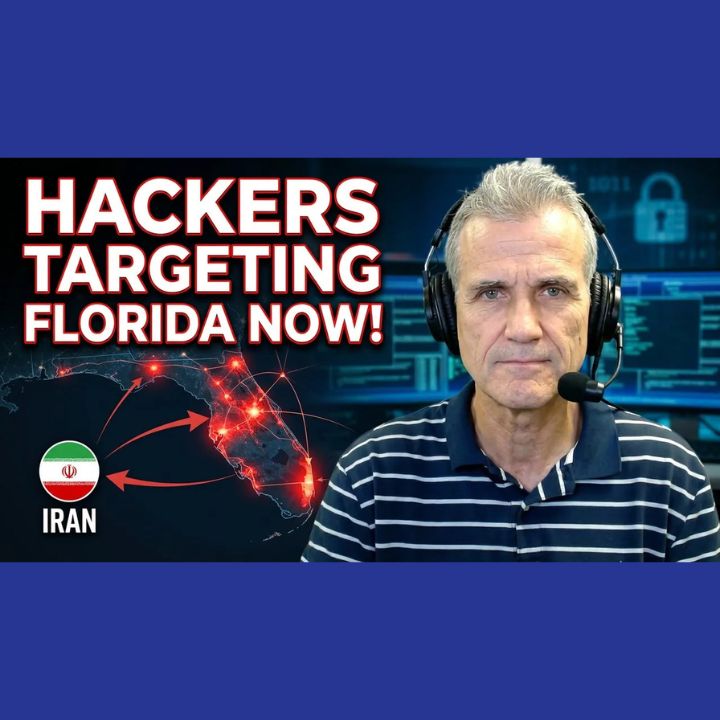
Watch our YouTube Video: Iranian Hackers Are Targeting Florida Right Now
When you have — or want to prevent — cybersecurity problems, you need A Faster PC.
A Faster PC is a leading managed services provider (MSP) serving Florida's Treasure Coast, Space Coast, and South Florida. We provide comprehensive IT support, advanced cybersecurity solutions, patch management, computer repair, and technical support for accounting offices, attorney's offices, medical offices, dental offices, professional offices, small to medium sized businesses, non-profits, churches, home office users, and individuals throughout the regions.
Every week at 10:07 AM EST, A Faster PC hosts A Faster PC Live Technical Support which is a live Radio Show that is livestreamed to YouTube and Facebook and is available as a podcast. For various ways to listen to and watch A Faster PC Live Technical support, visit https://www.afasterpc.com/live-technical-support/.
A Faster PC services the following counties and cities: St. Lucie County including: Port St. Lucie, Fort Pierce, St. Lucie West, Tradition, St. Lucie Village; Martin County including: Stuart, Jensen Beach, Jupiter Island, Ocean Breeze Park, and Sewall's Point; Indian River County: including Vero Beach, Sebastian, Fellsmere, Indian River Shores; Palm Beach County including: Jupiter, Jupiter Inlet Colony, Juno Beach, Tequesta, Palm Beach Gardens, North Palm Beach, Palm Beach Shores, Riviera Beach, West Palm Beach, Wellington, Royal Palm Beach, Greenacres, Lake Worth Beach, Lantana, Boynton Beach, Ocean Ridge, Briny Breezes, Gulf Stream, Delray Beach, Highland Beach, and Boca Raton; Broward County including: Fort Lauderdale, Hollywood, Pompano Beach, Coral Springs, Pembroke Pines, Miramar, Davie, Plantation, Sunrise, Deerfield Beach, Lauderhill, Weston, Tamarac, Coconut Creek, Margate, Lauderdale Lakes, Oakland Park, Hallandale Beach, Cooper City, Wilton Manors, Lighthouse Point, Parkland, Lauderdale-by-the-Sea, Sea Ranch Lakes, Lazy Lake, Hillsboro Beach, Southwest Ranches, North Lauderdale, Dania Beach; Miami-Dade County including: Miami, Miami Beach, Hialeah, Miami Gardens, Coral Gables, Homestead, Doral, North Miami, Aventura, Kendall, Cutler Bay, Sunny Isles Beach, Key Biscayne, Pinecrest, Surfside, Bal Harbour, North Miami Beach, Palmetto Bay, Miami Springs, Opa-locka, Miami Lakes, Florida City, South Miami, Sweetwater, West Miami, Bay Harbor Islands, Biscayne Park, El Portal, Golden Beach, Hialeah Gardens, Indian Creek, Medley, North Bay Village, and Virginia Gardens; and Okeechobee County including: Okeechobee, Taylor Creek, Cypress Quarters, Fort Drum, and Basinger.