
Stop Pushing It Off: How Small IT Problems Become Summer Disasters for Florida Businesses
Taking a reactive approach to IT might not feel like a problem — until summer arrives.
Most issues start small. A system slows down. A warning pops up. Something feels slightly off but still works. Because nothing is actually broken, it gets pushed aside in favor of more immediate priorities. Work continues. Everything seems fine.
But those small issues don't stay small. And when they surface, they rarely show up one at a time.
If you're a business owner on the Treasure Coast, Space Coast, or South Florida, you already know how summer changes the rhythm of your office. Staff takes vacations. Schedules get unpredictable. And the small things you've been putting off? They have a way of deciding to matter at the worst possible moment.
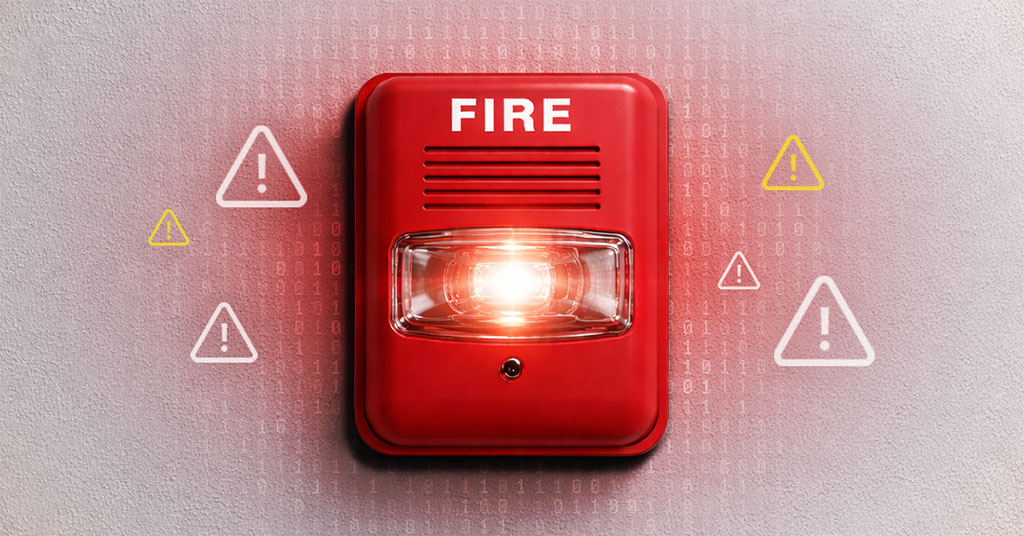
That's what turns a normal workday into a fire drill. And in a Florida summer, those fire drills hit harder.
For more context on the common IT problems facing Treasure Coast businesses, see our earlier breakdown.
The "It's Just a Little Slow" System
It usually starts with a system that's slightly slower than it should be.
Nothing stops working, so no one reports it. People adjust by waiting a few extra seconds, refreshing the screen, or trying again. Over time, that slowdown becomes part of the routine — just the way things are.
Until one day, it stops working altogether.
Now your team can't access what they need, and work stalls. People start troubleshooting on their own — restarting devices, guessing at the cause, looking for workarounds. If the person who normally handles IT issues isn't available (and in summer, that's likely), it takes even longer to figure out what's going on.
What could have been a quick fix when the issue first appeared turns into downtime that affects your entire team.
The Update That Keeps Getting Postponed
There's always an update that needs to be done.
But it's rarely a good time. There's a deadline, a project in progress, something more urgent. The update gets pushed to next week — and then pushed again.
Because everything seems to be working, it doesn't feel like a risk.
Eventually, something changes. A system becomes incompatible, a known issue gets worse, or security vulnerabilities are left exposed long enough to matter.
Now a critical tool isn't working — or maybe it stops working entirely.
Instead of a planned, controlled update, your team is dealing with an unplanned disruption. During a Florida summer, when fewer people are in the office, that disruption takes longer to resolve and has a bigger impact on the business.
The Untested Backup
Backups tend to run quietly in the background, so they're easy to forget about.
Maybe there was a warning at some point. A notification that didn't seem urgent. Since nothing failed at the time, it was easy to assume everything was fine.
That assumption holds until something actually goes wrong.
When a file is lost, a system fails, or data needs to be restored, the backup really matters. In that moment, you find out whether it's working or not. If it hasn't been running properly, is incomplete, or hasn't been tested, recovery becomes slower and far more complicated than expected.
What should have been a quick restore turns into a larger disruption — your whole team waiting to get back to work.
This is especially true for Florida medical offices, dental practices, law firms, and accounting offices where data integrity isn't just an operational concern — it's a compliance requirement.
How Proactive IT Prevents This
The difference isn't luck. It's approach.
Instead of waiting for something to break, proactive IT focuses on identifying and resolving issues early — before they affect your team. That means:
- Performance issues are addressed before they turn into outages.
- Updates are handled on a consistent schedule instead of being postponed.
- Backups are monitored and tested so they work when you need them.
It doesn't eliminate every issue. But it keeps small problems from becoming disruptions that pull your entire team off track — whether you're in Stuart, Melbourne, Fort Lauderdale, or anywhere in between.
Our remote IT services let us monitor, maintain, and support your systems in the background — so your team can stay focused on the work that matters.
What to Do Before the Next Issue Becomes Urgent
If you've got a few things sitting in the background right now, you're not alone.
The problem is, those issues usually bubble up at the worst posshttps://www.afasterpc.com/discoverycall/ible time — especially when your team is already stretched thin. Want to know what happens to your IT when your team is out of the office? Read our companion post.
As your IT partner, we make sure the small things don't turn into bigger problems:
✔ Keeping your systems monitored so issues don't go unnoticed
✔ Handling updates and maintenance so nothing gets pushed off indefinitely
✔ Making sure your backups work when you need them
✔ Giving your team a clear, fast path to get help when something isn't right
Instead of pushing things off and hoping they hold, you know they're handled.
Start with a free network assessment — it's a fast way to see what's sitting on your list before it turns into a fire drill.
Or book a quick discovery call — we'll take a look at what's going on and tell you exactly where you stand.
Call us at 772-878-5978 or visit https://www.AFasterPC.com.
And if this sounds like something someone you know is dealing with, send this their way: https://www.afasterpc.com/2026/06/15/small-it-problems-summer-downtime-florida-businesses/.
They're probably closer to a fire drill than they think.
Freequently Asked Questions
Q: Why do small IT problems turn into major downtime for Florida businesses in the summer?
A: Summer creates the perfect storm for IT disruptions. Staff vacations mean fewer people available to notice warning signs or respond quickly when something goes wrong. Issues that were already simmering — a sluggish computer, a skipped update, an untested backup — hit harder when the team is running lean. For businesses across the Treasure Coast, Space Coast, and South Florida, that combination of stretched staffing and deferred maintenance is exactly when small problems become expensive ones. Proactive IT monitoring catches those issues before they escalate, regardless of the season.
Q: How often should a small business in Florida test their data backups?
A: Backups should be tested at minimum on a quarterly basis — and ideally more frequently for businesses in regulated industries like healthcare, legal, or accounting. A backup that runs silently in the background is not the same as a backup that actually works. Testing means verifying that data can be fully restored in a reasonable time window, not just that the backup software appears to be running. Florida businesses that rely on patient records, financial data, or client files cannot afford to discover a failed backup only when they need it most. A managed IT provider will monitor and test backups on your behalf so you're never left guessing.
Q: What does proactive IT support actually include for a small business on the Treasure Coast?
A: Proactive IT support means your technology is being actively monitored and maintained before problems surface — not just repaired after something breaks. For a Treasure Coast business, that typically includes continuous system monitoring, patch and update management on a regular schedule, backup verification, security checks, and priority access to a technician when something does go wrong. Rather than calling for help after downtime has already started, proactive IT is designed to reduce the frequency and severity of those moments in the first place. Learn more at https://www.afasterpc.com/remote-it-services/.
Q: Is it really a security risk to delay software updates for my medical or dental office?
A: Yes — and the risk grows the longer the update is delayed. Software vendors release updates specifically to patch known vulnerabilities, meaning that every day a system goes unpatched is another day that weakness exists and could be exploited. For medical offices, dental practices, and other HIPAA-regulated businesses in Florida, an unpatched system that is breached can trigger compliance violations on top of the operational disruption. The good news is that with managed IT support, updates are handled on a controlled schedule so nothing gets pushed indefinitely — and your team never has to choose between meeting a deadline and applying a critical patch. See our cybersecurity services at https://www.afasterpc.com/advanced-cybersecurity/.
Q: How do I know if my South Florida business needs managed IT services?
A: A few reliable signs: your team regularly works around tech issues instead of reporting them, updates get pushed off because there's never a good time, you're not certain whether your backups are working, and when something breaks, you're not sure who to call or how long it will take to get help. If any of those sound familiar, managed IT services are likely worth a conversation. A Faster PC serves small and mid-sized businesses across the Treasure Coast, Space Coast, and South Florida — and we offer a free discovery call so you can understand exactly where your IT stands before committing to anything. Book yours at https://www.afasterpc.com/discoverycall/.
About A Faster PC
A Faster PC is a leading managed services provider (MSP) serving Florida's Treasure Coast, Space Coast, and South Florida. We provide comprehensive IT support, advanced cybersecurity solutions, patch management, computer repair, and technical support for accounting offices, attorneys' offices, medical offices, dental offices, professional offices, small- to medium-sized businesses, non-profits, churches, home office users, and individuals throughout the regions.
Every week at 10:07 AM EST, A Faster PC hosts A Faster PC Live Technical Support which is a live Radio Show that is livestreamed to YouTube and Facebook and is available as a podcast. For various ways to listen to and watch A Faster PC Live Technical support, visit https://www.afasterpc.com/live-technical-support/.
A Faster PC services the following counties and cities: St. Lucie County including: Port St. Lucie, Fort Pierce, St. Lucie West, Tradition, St. Lucie Village; Martin County including: Stuart, Jensen Beach, Jupiter Island, Ocean Breeze Park, and Sewall's Point; Indian River County: including Vero Beach, Sebastian, Fellsmere, Indian River Shores; Palm Beach County including: Jupiter, Jupiter Inlet Colony, Juno Beach, Tequesta, Palm Beach Gardens, North Palm Beach, Palm Beach Shores, Riviera Beach, West Palm Beach, Wellington, Royal Palm Beach, Greenacres, Lake Worth Beach, Lantana, Boynton Beach, Ocean Ridge, Briny Breezes, Gulf Stream, Delray Beach, Highland Beach, and Boca Raton; Broward County including: Fort Lauderdale, Hollywood, Pompano Beach, Coral Springs, Pembroke Pines, Miramar, Davie, Plantation, Sunrise, Deerfield Beach, Lauderhill, Weston, Tamarac, Coconut Creek, Margate, Lauderdale Lakes, Oakland Park, Hallandale Beach, Cooper City, Wilton Manors, Lighthouse Point, Parkland, Lauderdale-by-the-Sea, Sea Ranch Lakes, Lazy Lake, Hillsboro Beach, Southwest Ranches, North Lauderdale, Dania Beach; Miami-Dade County including: Miami, Miami Beach, Hialeah, Miami Gardens, Coral Gables, Homestead, Doral, North Miami, Aventura, Kendall, Cutler Bay, Sunny Isles Beach, Key Biscayne, Pinecrest, Surfside, Bal Harbour, North Miami Beach, Palmetto Bay, Miami Springs, Opa-locka, Miami Lakes, Florida City, South Miami, Sweetwater, West Miami, Bay Harbor Islands, Biscayne Park, El Portal, Golden Beach, Hialeah Gardens, Indian Creek, Medley, North Bay Village, and Virginia Gardens; and Okeechobee County including: Okeechobee, Taylor Creek, Cypress Quarters, Fort Drum, and Basinger.