If it feels like the cybersecurity headlines have been coming faster than usual, that's because they have. In a single week, the federal government issued three separate emergency cybersecurity orders, a major US manufacturer had its physical production lines shut down by hackers, and researchers disclosed a brand-new Windows vulnerability that Microsoft still has no patch for.
For business owners on Florida's Treasure Coast, Space Coast, and South Florida, none of this is abstract. The same platforms named in this week's threats, Microsoft SharePoint, SonicWall remote access devices, and everyday Windows machines, are running inside small and medium-sized businesses across the state right now. Here are the seven threats A Faster PC's managed IT services team is tracking this week, in plain English.
1. A triple-chained SharePoint vulnerability triggers a CISA emergency order
If your business uses Microsoft SharePoint, the document sharing and collaboration platform hundreds of thousands of companies rely on daily, this is the most urgent item on the list. CISA, the federal government's cybersecurity agency, confirmed this week that attackers are chaining three separate SharePoint vulnerabilities together in a single attack.
Here's what that means in practice: attackers bypass the login entirely, run their own code on the server, and steal security keys, all in one move. CISA is telling every organization, not just federal agencies, to apply the available patches immediately, confirm they installed correctly, and review server logs for signs of unusual activity.
Why this matters for Florida businesses
If your SharePoint server hasn't been patched, someone may already be inside your system. This isn't a task to get to this week; it needs to happen today. If you're not sure of your organization's patch status, our cybersecurity services page outlines how our team can check for you.
2. Oracle and Fortinet round out a three-order emergency week
SharePoint wasn't the only platform under a federal emergency deadline this week. Federal agencies had until this past Saturday to patch a vulnerability in Oracle's E-Business Suite, a fix Oracle actually released back in May. CISA then gave agencies until this past Sunday to patch two separate vulnerabilities in Fortinet's security platform, both already being actively exploited in the wild.
Three government emergency orders in a single week is not a normal cadence. When CISA moves this fast and this publicly across three different platforms, it's a strong signal that the risk is immediate. If your business runs Oracle E-Business Suite or Fortinet security appliances and isn't certain of its patch status, that's a call worth making before the end of the day.
3. A SonicWall zero-day that requires no login to exploit
A lot of small and medium-sized businesses here in Florida rely on SonicWall devices to secure remote access, the connections that let employees work securely from home or the field. SonicWall confirmed this week that attackers are actively exploiting two new vulnerabilities in its SMA 1000 line.
The part that should stop any business owner cold: one of these two flaws requires no login whatsoever to exploit. An attacker doesn't need your password, and they don't need to trick an employee into clicking anything. Patches are available from SonicWall. If they haven't been applied yet, an unpatched remote access gateway is effectively an open door.
4. Ransomware physically halted Coca-Cola's production line
Coca-Cola disclosed this week that its Fairlife Dairy subsidiary was hit by ransomware, an attack that forced the company to physically suspend production in the United States. Not computer systems, physical production. The machines stopped running.
This is the reality of ransomware in 2026: it's no longer just about stolen files and locked screens, it can bring an entire physical operation to a halt. The data consistently shows that hackers target smaller businesses precisely because defenses tend to be thinner and owners are less likely to catch an intrusion in time. Coca-Cola made national news; the thousands of small and medium sized businesses hit every year usually don't. Learn more about how managed IT service's can help build ransomware defenses before an attack happens, not after.
5. The Ernst & Young breach shows how third-party vendors put your data at risk
Ernst & Young, one of the largest accounting firms in the world, disclosed this week that an unauthorized party accessed a third-party support system used by its IT staff and downloaded documents that included client tax information.
The lesson here isn't to stop working with accountants or advisors. It's to understand that your sensitive financial data doesn't just live on your computer; it lives on your accounting system, on their vendor systems, and on the support tools used by the people who service those vendors. Every third party that touches your financial information is a potential entry point, and their breach becomes your problem. Asking vendors and advisors the right security questions is a good place to start, and it's a conversation our team is happy to help you prepare for.
6. ClickLock malware is targeting Mac users through a Terminal trick
Mac users aren't immune this week either. A new piece of malware called ClickLock is spreading by tricking people into pasting a single command into their Mac's Terminal application. Once that happens, the malware locks the entire computer until the victim types their Mac login password, at which point it steals saved passwords, browser data, and any cryptocurrency wallet information.
The rule here is simple: if any website, pop-up, or online guide ever instructs you to paste something into Terminal, don't do it. Legitimate software never asks for that. Close the window, shut down the computer, and walk away.
7. A phishing wave is targeting password manager master passwords, and a Windows zero-day still has no patch
LastPass and Bitwarden are both warning users about a wave of phishing emails impersonating their official security alerts, all designed to steal the one password that unlocks every other password: the master password. Neither company will ever email you asking for it. Delete any email that does, and always type the website address directly into your browser rather than clicking a link.
Finally, researchers this week disclosed a new Windows vulnerability called LegacyHive. It allows someone with a basic, everyday user account to make changes that should only be possible from an administrator account. An attacker needs some existing access to the network to exploit it, but in a business environment where employees share systems, that isn't a high bar. As of this week, Microsoft has no official patch. In the meantime, limiting employee system access to only what's needed for their job, and actively monitoring the network for unusual activity, are the two most effective steps a business can take.
This week also brought Microsoft's largest Patch Tuesday release ever, 570 vulnerabilities patched, including three zero-days. And with Windows Server 2022 and Windows 11 24H2 both reaching end of mainstream support on October 13th, now is the time to start planning any needed upgrades.
What Florida business owners should do next
Seven threats in one week is a lot to absorb, but the pattern is consistent: patch immediately when a vendor releases a fix, limit access to only what employees need, and know exactly what data your vendors and advisors can see. If you're a business owner on Florida's Treasure Coast, Space Coast, or South Florida and you're not confident your organization is protected against what's covered here, A Faster PC can help.
Call us today at 772-878-5978, visit AFasterPC.com to schedule a consultation, or download our free cybersecurity report to see, in plain English, the threats out there and what to do about them. A Faster PC proudly serves businesses across the Treasure Coast, Space Coast, and South Florida, along with clients nationwide.
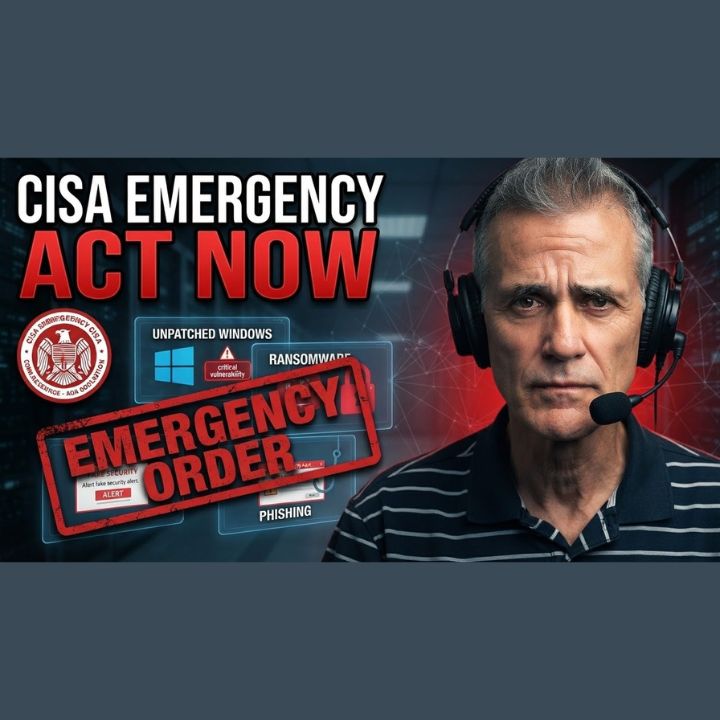
Watch the full video here: CISA Just Issued Emergency Orders — Here's What You Need to Do Now: https://www.youtube.com/watch?v=lcv3Pvitw9c&feature=youtu.be
Frequently Asked Questions
Q: What is the SharePoint vulnerability CISA is warning about this week?
A: CISA confirmed hackers are chaining three separate Microsoft SharePoint vulnerabilities together in a single attack, letting them bypass login, run their own code on the server, and steal security keys in one move. If your business uses SharePoint, CISA says the patch needs to be applied immediately, not just at some point this week.
Q: Why did the federal government issue three cybersecurity emergency orders in one week?
A: CISA issued emergency directives covering Microsoft SharePoint, Oracle E-Business Suite, and Fortinet's security platform, all vulnerabilities already being actively exploited by attackers. When the federal government moves this fast on three separate platforms in a single week, it's a strong signal that the threat is real and immediate for any organization running that software.
Q: What is the SonicWall zero-day vulnerability and who is at risk?
A: SonicWall confirmed attackers are exploiting two new vulnerabilities in its SMA 1000 line of remote access devices, the hardware many small and medium-sized businesses use to let employees connect securely from home or the field. One of the flaws requires no login at all to exploit, so any business using an unpatched device is exposed.
Q: How did ransomware physically shut down Coca-Cola's production?
A: Coca-Cola disclosed that its Fairlife Dairy subsidiary was hit by ransomware that forced the company to physically suspend production in the United States, not just take computer systems offline. It's a reminder that ransomware in 2026 can halt an entire physical operation, and small and medium-sized businesses are targeted even more often than large corporations because their defenses tend to be thinner.
Q: What is ClickLock malware and how does it infect Mac computers?
A: ClickLock is malware that tricks Mac users into pasting a command into the Terminal application, then locks the entire computer until the victim types their Mac login password, at which point it steals saved passwords, browser data, and any cryptocurrency wallet information. If a website or pop-up ever asks you to paste something into Terminal, close it immediately and do not follow the instructions.
Q: Are LastPass and Bitwarden sending phishing emails about my master password?
A: No. Both LastPass and Bitwarden are warning users about phishing emails that impersonate their official security alerts to trick people into typing in their master password. Neither company will ever email you asking for your master password, so any email requesting it should be deleted, and you should type the real website address into your browser directly rather than clicking a link.
Q: What is the LegacyHive Windows vulnerability and is there a patch?
A: LegacyHive is a newly disclosed Windows vulnerability that lets someone with a basic user account make changes that should only be possible from an administrator account. As of this week, Microsoft has not released an official patch, so businesses should limit employee system access to only what's needed for their job and make sure network activity is being actively monitored.
Q: How can businesses on Florida's Treasure Coast, Space Coast, or South Florida protect themselves from these threats?
A: A Faster PC works with small and medium-sized businesses across Florida's Treasure Coast, Space Coast, and South Florida to confirm patch status, monitor networks for unusual activity, and close the exact gaps covered in this week's roundup. If you're not confident your business is protected against threats like these, call A Faster PC at 772-878-5978 or visit AFasterPC.com to download the free cybersecurity report.
About A Faster PC
A Faster PC the leading managed services provider (MSP) serving Florida's Treasure Coast, Space Coast, and South Florida. A Faster PC provides responsive IT support, advanced cybersecurity solutions, cloud backup, disaster recovery, breach remediation, patch management, computer repair, and technical support for accounting offices, attorneys' offices, medical offices, dental offices, professional offices, small- to medium-sized businesses, non-profits, churches, home office users, and individuals throughout the regions. We help our clients cut costs in their Internet, TV, and telephone bills and in business operations.
Every week at 10:07 AM EST, A Faster PC hosts A Faster PC Live Technical Support, which is a live Radio Show that is livestreamed to YouTube and Facebook and is available as a podcast. For various ways to listen to and watch A Faster PC Live Technical Support, visit https://www.afasterpc.com/live-technical-support/.
A Faster PC services the following counties and cities: St. Lucie County including: Port St. Lucie, Fort Pierce, St. Lucie West, Tradition, St. Lucie Village; Martin County including: Stuart, Jensen Beach, Jupiter Island, Ocean Breeze Park, and Sewall's Point; Indian River County: including Vero Beach, Sebastian, Fellsmere, Indian River Shores; Palm Beach County including: Jupiter, Jupiter Inlet Colony, Juno Beach, Tequesta, Palm Beach Gardens, North Palm Beach, Palm Beach Shores, Riviera Beach, West Palm Beach, Wellington, Royal Palm Beach, Greenacres, Lake Worth Beach, Lantana, Boynton Beach, Ocean Ridge, Briny Breezes, Gulf Stream, Delray Beach, Highland Beach, and Boca Raton; Broward County including: Fort Lauderdale, Hollywood, Pompano Beach, Coral Springs, Pembroke Pines, Miramar, Davie, Plantation, Sunrise, Deerfield Beach, Lauderhill, Weston, Tamarac, Coconut Creek, Margate, Lauderdale Lakes, Oakland Park, Hallandale Beach, Cooper City, Wilton Manors, Lighthouse Point, Parkland, Lauderdale-by-the-Sea, Sea Ranch Lakes, Lazy Lake, Hillsboro Beach, Southwest Ranches, North Lauderdale, Dania Beach; Miami-Dade County including: Miami, Miami Beach, Hialeah, Miami Gardens, Coral Gables, Homestead, Doral, North Miami, Aventura, Kendall, Cutler Bay, Sunny Isles Beach, Key Biscayne, Pinecrest, Surfside, Bal Harbour, North Miami Beach, Palmetto Bay, Miami Springs, Opa-locka, Miami Lakes, Florida City, South Miami, Sweetwater, West Miami, Bay Harbor Islands, Biscayne Park, El Portal, Golden Beach, Hialeah Gardens, Indian Creek, Medley, North Bay Village, and Virginia Gardens; and Okeechobee County including: Okeechobee, Taylor Creek, Cypress Quarters, Fort Drum, and Basinger.