
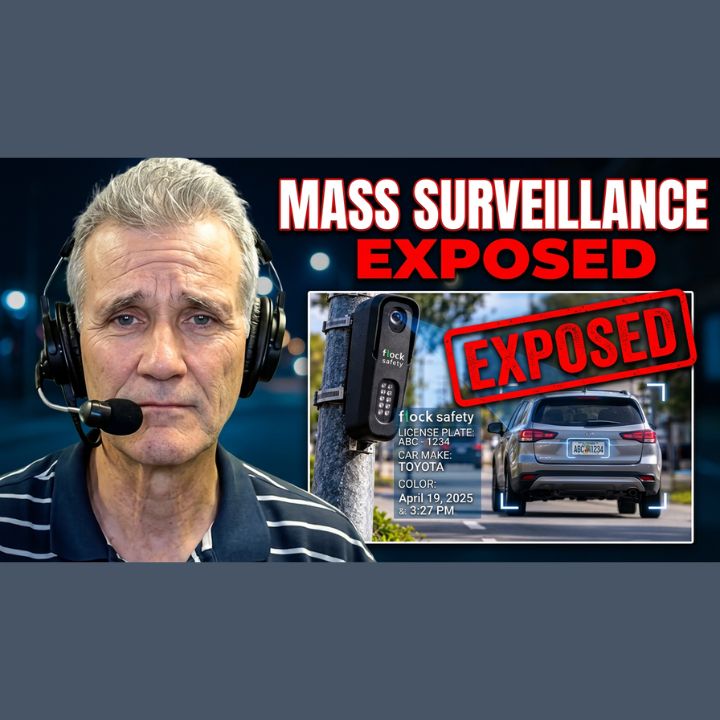
If a camera on your street can log your license plate, your car's color, the ladder rack on your roof, and the exact minute you drove by, how well does it actually know you? Here in Florida, that question just became very real. In September 2026, the state ordered Flock Safety license plate cameras off state highways, and Governor DeSantis has described the whole system as out of control.
That decision followed two cases, one in Haines City and one in Sarasota, in which officers were fired and arrested for using these cameras to track people they were romantically interested in.
This is Part 2 of A Faster PC's Flock camera series. If you missed the first installment, start with Flock cameras in Florida: privacy vs. safety in St. Lucie County. Below, we cover what these cameras record, how investigators can find a car without a plate number, how long the data is kept, and what Florida's ban does and does not cover.
What Does a Flock Camera Actually Record?
A Flock camera is no longer just a license plate reader. Yes, it reads your plate. But according to Flock's own privacy policy, it also saves:
- A photo of your vehicle
- Your car's color and make
- The state on your license plate
- The time and date
- The exact location of the camera
So a single drive-by can create a record that reads like this: silver Honda SUV, Florida plate, this intersection, 2:41 p.m. on Tuesday.
Think of It Like a Customer Check-In
If you run a business, picture a customer check-in system. One check-in does not tell you much. Hundreds of check-ins start to tell a story about that customer's habits. License plate data works the same way.
How Investigators Can Find Your Car Without Your Plate Number
This is the part that surprises most people. Investigators do not need your plate number to find your car. Flock calls the feature Vehicle Signature, and it allows searches by:
- Body type, make, and color
- Plate state
- Roof racks and bike racks
- Trailers and special wheels
- Visible damage, like a cracked taillight
A Real-World Example
Say a witness only remembers a white pickup truck with a ladder rack. That is enough to start a search, with no full plate needed. If the witness caught the first three letters of the plate, combine that with color and body style, and the list of possible vehicles gets very small, very fast.
That is genuinely helpful for solving crimes. It also means your car itself is now searchable, whether or not anyone ever types in your plate.
Why Privacy Groups Are Worried: Patterns, Not Single Sightings
Privacy groups such as the Electronic Frontier Foundation and the ACLU have raised concerns, and their worry is not about any one camera.
One sighting tells you almost nothing. But your car near the same office every weekday morning, the same house every night, the same church every Sunday, or the same clinic a few times a month starts to form a pattern. Nobody needs your face or your name to build it. They just need enough cameras logging your car over enough time.
Flock's Response
Flock pushes back on this. The company says each camera captures only a point-in-time snapshot and is not a GPS tracker following you live. That is technically true. The open question is at what point a large enough pile of snapshots starts acting like a trail.
Does Flock Use Facial Recognition?
According to the company, no. Flock says its system is built to identify vehicles, not faces, drivers, or passengers.
There is a wrinkle, though. Flock has a newer feature called FreeForm that lets investigators type a plain-language description, such as "blue car with yellow spray paint," instead of using exact filters. Flock says FreeForm is not facial recognition and that certain search types are blocked.
However, journalists this year reported finding audit logs showing officers on Flock's network had run FreeForm searches describing people, not vehicles. Flock has said some of that activity was internal testing to show what gets blocked. Either way, the gap between what a tool is designed to do and how it actually gets used is a big part of why Florida acted. Concerned about the cameras closer to home? Read are your smart cameras spying on you?
How Long Does Flock Keep Your Data?
Flock's default retention period was 30 days. In August 2026, the company announced it was cutting the default to seven days, saying more than 90% of searches happen within a week anyway.
That sounds like progress, but there is a catch few people are talking about: existing customers can keep the old 30-day setting if they choose. How long your data is kept depends on what your local agency selected, not on the press release.
Florida's Ban on License Plate Readers on State Highways
What FDOT Ordered
In early September 2026, the Florida Department of Transportation (FDOT) revoked every permit for license plate readers on state highways and state rights-of-way. Local agencies were given 30 days to physically remove the cameras, or the state would remove them. No new permits will be issued.
According to the FDOT memo, the reasons included an exponential increase in cameras, concerning reports of misuse, data privacy concerns, and surveillance schemes. The Haines City and Sarasota cases, where officers faced firing and criminal charges for tracking love interests rather than criminals, helped push the decision over the edge.
What the Ban Does Not Cover
The order applies to state highways and rights-of-way. Local streets, private neighborhoods, and businesses can still use these cameras.
St. Lucie County Takes Its Own Step
As we reported last week, the day after FDOT's ruling, the St. Lucie County Commission blocked the use of Flock cameras on county right-of-way as well. This is not the end of Flock in Florida, but it is the first major crack in a system that has grown with almost no pushback.
What Highway Cameras Have to Do With Your Business Data
What does a highway camera have to do with your office or home computer? Everything. It comes down to the same core questions:
- Who gets to collect data on you?
- How long do they keep it?
- Who is allowed to look at it?
Those same questions sit behind every leaked customer list, every breached email account, and every ransomware lockup we help clean up. For Treasure Coast, Space Coast, and South Florida businesses, protecting data means making sure only the right people have access and that misuse gets caught fast. That is the everyday work behind our advanced cybersecurity services
What's Next in Our Flock Camera Series
Knowing what the camera records is only half of the story. The other half is who is allowed to search across all of those cameras: local police, other states, even federal agencies. Your city might have one camera today, and the next city might have 20.
In the coming weeks, we will bring on guests who make the case for Flock cameras and guests who make the case against them, in separate episodes. Our goal is simple: make sure your opinion is based on facts, then let you decide whether these cameras belong in our communities.
Frequently Asked Questions About Flock Cameras in Florida
What information does a Flock license plate camera record?
A Flock camera does more than read your license plate. According to Flock's privacy policy, it also saves a photo of your vehicle, its color and make, the state on your plate, the time and date, and the exact location of the camera. One drive-by can create a detailed record of where your car was and when.
Can police find my car without knowing my license plate number?
Yes. Flock's Vehicle Signature feature lets investigators search by body type, make, color, plate state, and details like roof racks, bike racks, trailers, special wheels, or visible damage. Combined with a partial plate, those details can narrow the list of matching vehicles very quickly.
Do Flock Safety cameras use facial recognition?
Flock says no. The company states its system is built to identify vehicles, not faces, drivers, or passengers. However, journalists reported audit logs showing FreeForm searches that described people, which Flock has said was partly internal testing of what gets blocked.
How long do Flock cameras keep license plate data?
Flock's default retention was 30 days. In August 2026, the company announced a new seven-day default, but existing customers can keep the 30-day setting. How long your data is kept depends on the choice your local agency made.
Why did Florida remove Flock cameras from state highways?
In early September 2026, the Florida Department of Transportation revoked all license plate reader permits on state highways and rights-of-way. The memo cited an exponential increase in cameras, reports of misuse, data privacy concerns, and surveillance schemes. Cases in Haines City and Sarasota, where officers were fired and arrested for tracking love interests, helped drive the decision.
Are Flock cameras still allowed on the Treasure Coast after the FDOT ban?
Partly. The state order covers state highways and rights-of-way, so local streets, private neighborhoods, and businesses can still use these cameras. In St. Lucie County, the County Commission went a step further the day after FDOT's ruling and blocked Flock cameras on county right-of-way.
What do license plate cameras have to do with my business's cybersecurity?
It is the same core issue: who collects data, how long it is kept, and who can access it. Those questions sit behind leaked customer lists, breached email accounts, and ransomware attacks. A Faster PC helps businesses on the Treasure Coast, Space Coast, and South Florida make sure only the right people have access and that misuse is caught fast.
Protect Your Business Data With A Faster PC
The lesson from Florida's Flock camera decision applies to every business: know who has access to your data, and stop misuse before it becomes a headline. A Faster PC is a managed IT services and cybersecurity provider serving the Treasure Coast, Space Coast, and South Florida.
Call us today at 772-878-5978 or visit AFasterPC.com. While you are there, download our free cybersecurity report, a simple checklist to help lock down your systems. Ready to talk? Schedule a discovery call.
Watch the full video here: The Flock Camera Debate: Privacy Vs Public Safety.
About A Faster PC
A Faster PC the leading managed services provider (MSP) serving Florida's Treasure Coast, Space Coast, and South Florida. A Faster PC provides responsive IT support, advanced cybersecurity solutions, cloud backup, disaster recovery, breach remediation, patch management, computer repair, and technical support for accounting offices, attorneys' offices, medical offices, dental offices, professional offices, small- to medium-sized businesses, non-profits, churches, home office users, and individuals throughout the regions. We help our clients cut costs in their Internet, TV, and telephone bills and in business operations.
Every week at 10:07 AM EST, A Faster PC hosts A Faster PC Live Technical Support, which is a live Radio Show that is livestreamed to YouTube and Facebook and is available as a podcast. Visit our Live Technical Support page for various ways to schedule a technical support session and for various ways to listen to and watch A Faster PC Live Technical Support.
A Faster PC services the following counties and cities: St. Lucie County including: Port St. Lucie, Fort Pierce, St. Lucie West, Tradition, St. Lucie Village; Martin County including: Stuart, Jensen Beach, Jupiter Island, Ocean Breeze Park, and Sewall's Point; Indian River County: including Vero Beach, Sebastian, Fellsmere, Indian River Shores; Palm Beach County including: Jupiter, Jupiter Inlet Colony, Juno Beach, Tequesta, Palm Beach Gardens, North Palm Beach, Palm Beach Shores, Riviera Beach, West Palm Beach, Wellington, Royal Palm Beach, Greenacres, Lake Worth Beach, Lantana, Boynton Beach, Ocean Ridge, Briny Breezes, Gulf Stream, Delray Beach, Highland Beach, and Boca Raton; Broward County including: Fort Lauderdale, Hollywood, Pompano Beach, Coral Springs, Pembroke Pines, Miramar, Davie, Plantation, Sunrise, Deerfield Beach, Lauderhill, Weston, Tamarac, Coconut Creek, Margate, Lauderdale Lakes, Oakland Park, Hallandale Beach, Cooper City, Wilton Manors, Lighthouse Point, Parkland, Lauderdale-by-the-Sea, Sea Ranch Lakes, Lazy Lake, Hillsboro Beach, Southwest Ranches, North Lauderdale, Dania Beach; Miami-Dade County including: Miami, Miami Beach, Hialeah, Miami Gardens, Coral Gables, Homestead, Doral, North Miami, Aventura, Kendall, Cutler Bay, Sunny Isles Beach, Key Biscayne, Pinecrest, Surfside, Bal Harbour, North Miami Beach, Palmetto Bay, Miami Springs, Opa-locka, Miami Lakes, Florida City, South Miami, Sweetwater, West Miami, Bay Harbor Islands, Biscayne Park, El Portal, Golden Beach, Hialeah Gardens, Indian Creek, Medley, North Bay Village, and Virginia Gardens; and Okeechobee County including: Okeechobee, Taylor Creek, Cypress Quarters, Fort Drum, and Basinger.